
Your patient has been researching this for months before they ever find you. They've read Reddit threads about hairlines carved at the wrong angle. They've watched news segments about men in psychological distress after unqualified technicians destroyed their scalps. They've seen the social media screenshots from guys who flew to Turkey for $2,500 and came home to a result they'll spend years trying to correct. By the time they click your ad, they're not curious. They're suspicious.
That suspicion is not about you personally. It's about your industry. And it lands in your consultation room every single day.
Why Your Patients Arrive Scared Before You Say a Word
The hair transplant industry has a trust problem that you did not create. Right now, according to the Turkish Hair Transplant Industry Association's own president, 90 percent of the sector operates off the books. Corrective and repair surgeries surged 166 percent in a single year. These aren't fringe statistics. They reflect a wave of genuinely damaged patients who are now the loudest voices in the forums and Reddit threads your prospective patients read every night.
"So many clinics are getting away with awful work by untrained people and leaving men thinking their lives are over." That was a direct quote in The Times UK. Not from a disgruntled outlier. From a pattern that has become normalized.
Your prospective patient has read all of it. They arrive at your consultation carrying that weight. They sit across from you, they ask good questions, they seem engaged. And somewhere in their head they're running a question they can't ask out loud: are you one of the real ones, or are you one of the ones they warn about?
Every clinic has a professional website. Every clinic has five-star reviews. Every clinic has before-and-after photos. None of that distinguishes you from the bad ones in the mind of someone who has already seen how easy it is to fake. "Being the best surgeon in town is no longer enough," wrote one marketing firm that works specifically in hair restoration. "Skepticism is high."
When trust is absent, patients fall back on the only comparison they can make: price. Not because they're cheap. Because when they can't feel the difference between you and a factory-style clinic, the number on the screen is all they have. "Bro just go to Turkey. You'll be fine." That's the advice circulating in the forums. And some of your prospective patients are taking it.
The ones who stay don't automatically book either. They want to trust you. But trust doesn't transfer through a phone call from your coordinator or a well-designed landing page. It takes time. It takes direct exposure to your thinking. It takes watching you answer a hard question honestly in real time. None of that happens in a standard consultation. So they say they'll think about it. And you never hear from them again.
This is not a lead problem. It's not a price problem. It's a trust problem. And the usual fixes don't touch it.
More ad spend doesn't fix it. A better follow-up script doesn't fix it. A new marketing agency definitely doesn't fix it. The only thing that fixes a trust deficit is a direct, human, face-to-face experience of who you actually are as a surgeon and a person. That's what patients need before they can commit to something this permanent and this personal. And for most clinics, nothing in their patient acquisition process provides it.
What Happened When One Clinic Stopped Fighting the Trust Problem and Started Solving It
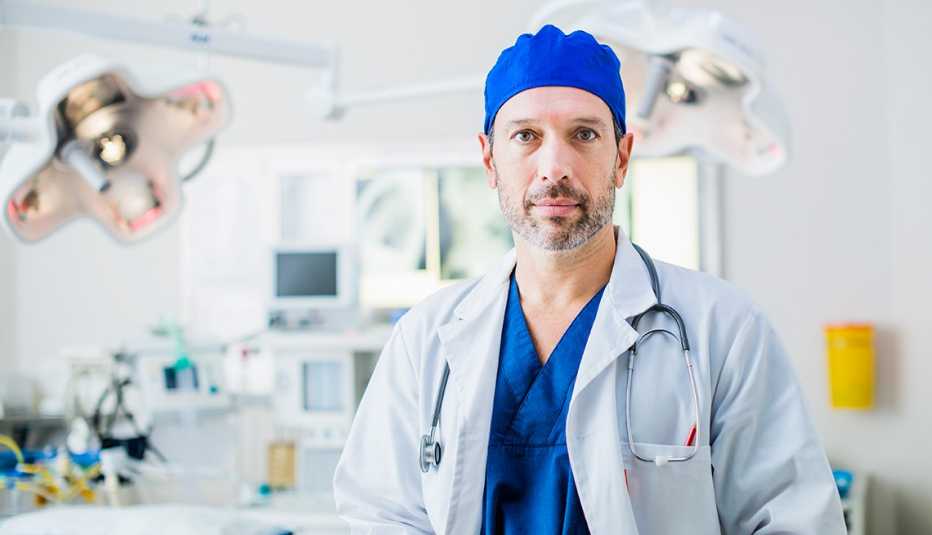
Dr. Marcus Webb runs a two-surgeon hair restoration clinic outside of Columbus, Ohio. His outcomes are genuinely strong. His existing patients refer him consistently. His Google reviews are solid and real. By every clinical measure, his practice is excellent.
His consultation close rate was stuck at 32 percent.
He tried the agency route twice. The first agency sent leads. Most of them ghosted. The second agency sent better leads and a more expensive dashboard. More of those ghosted too. He hired a patient coordinator who was specifically trained in healthcare sales conversion. She was good at her job. The close rate nudged up to 38 percent and plateaued. He ran a promotion offering a discounted consultation. The people who came in for the discount were not the patients he wanted to operate on.
In the meantime, he watched patients use his consultation to validate a decision they had already made to go abroad. He knew what the Turkish results looked like in two years. He had operated on several of the men who came back needing repair work. It didn't make the conversation easier.
A colleague mentioned the workshop idea at a conference. Dr. Webb's first reaction was honest: "I'm a surgeon. I'm not a presenter. I don't do sales events." The framing bothered him. He had spent his career building a practice around clinical credibility, not salesmanship. Hosting what sounded like a group sales pitch felt like the wrong direction.
What changed his mind was a different framing. This wasn't a sales event. It was an education event. He wouldn't be pitching procedures. He would be doing what he does in every consultation, answering questions, explaining the process, setting realistic expectations, showing real results. The only difference was doing it in front of a group of 12 people instead of one person at a time.
He agreed to try one. The materials, the script, the slide deck, and the ads were built for him before he walked in the room. His job was to present.
Twelve people attended. He spoke for about 50 minutes. He answered questions from the room. One patient asked about what happens when things go wrong. Dr. Webb answered it directly and honestly, describing exactly how complications are handled and what that process looks like. It was the kind of answer he gives in private consultations that rarely feel like enough in a one-on-one room.
In the group, something different happened. Several other attendees heard the answer and visibly relaxed. One woman said out loud: "That's the question I was too afraid to ask." The room laughed. Dr. Webb kept presenting.
Of the 12 attendees, 7 booked consultations or left deposits on the same day. For Dr. Webb, that was more than double his typical conversion rate from the same number of contacts. He was careful not to read too much into one event. But he ran another one three weeks later. The results were similar.
"The thing that surprised me wasn't the numbers. It was that nobody felt sold to. One patient told me afterward it was the first time he felt like he was being taught, not pitched. That's what I'd been trying to create in every individual consultation for years."
Dr. Marcus Webb, hair restoration surgeon, Columbus OHWhat Dr. Webb experienced in that room is not a sales technique. It's what happens when a group of skeptical, nervous people who distrust an entire industry watch a qualified surgeon answer hard questions honestly in public. The trust that takes weeks to build through individual follow-up calls forms in a single afternoon. That's the mechanism. And it's repeatable.
How the Workshop Method Builds That Trust for Your Clinic, and Who Does the Work

The Workshop Method is a done-for-you system built specifically for hair restoration clinic owners who are already running 8 to 10-hour procedure days. You do not design the event. You do not write the copy. You do not manage the ad account or build the presentation or figure out what to say when the room goes quiet. All of that is handled before you walk in the door. Your job is to show up and present.
Here is exactly what is built and delivered to you:
You show up. You read the script. You answer questions from the room. Everything else is handled.
What Clinics Running This System Are Reporting
On roughly $300 in local Facebook and Instagram ads, clinics using this system are consistently filling rooms with 8 to 16 qualified local prospects. These are people who registered, confirmed, and chose to give up an evening to attend. The self-selection alone means the room is warmer than any cold lead list.
In many cases, around half of the room books a consultation or leaves a deposit on the same day. Results vary by market, by clinic, and by how closely the framework is followed. But the directional shift from a standard 30 to 40 percent cold consultation close rate to a workshop-driven outcome is significant enough that clinics running two events per month describe a meaningfully different pipeline within the first 60 days.
The system is repeatable. The same ads, the same deck, the same script, the same handout materials, run on the same rhythm every few weeks. The compounding effect on the consultation pipeline is what separates clinics running this consistently from those who tried it once.
"The room does the work that no phone call ever could. By the time we got to the offer, I could see which patients had already decided. We were just giving them the paperwork."
Practice manager, Southeast US hair restoration clinicThe First Workshop Costs You Nothing. Here Is Why We Make That Offer.
We've heard the objection. You've been burned by a marketing agency before. You paid for leads and got impressions. You paid for a system and got a PDF. The last thing you need is another promise with a monthly retainer attached to it.
So we don't ask for that. The first workshop we build for your clinic is completely free of charge. You pay only the ad spend to fill the room, roughly $300. Everything else, the ads, the slide deck, the script, the handout materials, the prep call, the follow-up sequences, is built and delivered at no cost to you.
If the workshop runs and you see patients convert and you want to keep going, we continue working together. If for any reason it doesn't work for your clinic, you owe us nothing. No contract. No retainer. No invoice.
We make this offer because the clinic owners who see the first workshop work become long-term partners. We'd rather prove the system in your market before asking for anything. That's the only way this makes sense for both sides.
One important note: we work with one clinic per market area. If we're already partnered with another clinic in your city, we can't take your business. That constraint is the whole reason market availability matters. Availability is confirmed on the strategy call.
We Build Everything. You Show Up and Present.
Book a free 20-minute call. We check availability in your market, confirm your clinic is a fit, and if it is, we start building your first workshop immediately at no cost.